Are Expensive Suitcases Worth It?
Updated June 2026
Short answer: Worth It for Some
Up to a point, yes, but the curve flattens fast. Going from a bargain-bin suitcase to a genuinely well-built one (think $375 to $500) buys real, felt improvements: smoother wheels, a shell or fabric that survives airline handling, and warranties that actually get honored. For anyone who travels more than a few times a year, that’s money well spent. But beyond roughly the buy-it-for-life tier, you’re mostly paying for materials, brand, and design: our research found a $1,800 Rimowa is functionally outperformed by bags costing a fifth as much. So “expensive” is worth it; “luxury” usually isn’t, unless the look is the point.
We may earn a commission when you buy through links on this page. It never affects our scores or picks. How we make money.
Price breakdown
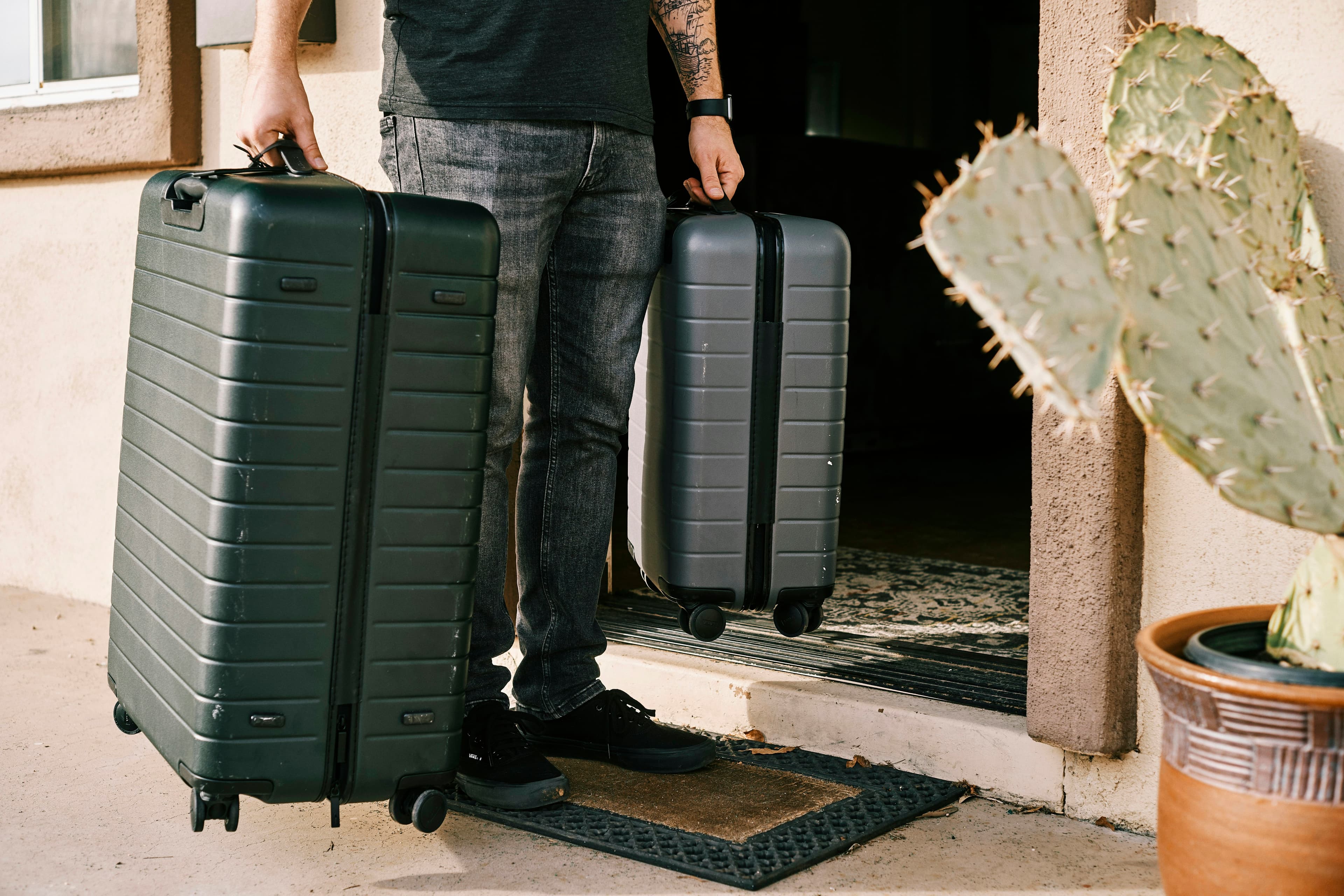
Checked bags span a wide range. Budget brand-name hardshells like the Samsonite Omni 2 run $120 to $149. The value sweet spot is $375 to $500, covering the Away The Large ($375) and Travelpro Platinum Elite ($485), where you get great wheels, durability, and strong warranties. The buy-it-for-life tier is the Briggs & Riley Baseline at $929. Luxury starts around $1,200 (Rimowa’s polycarbonate Essential) and climbs to ~$1,800 for the aluminum Original. The biggest quality jump per dollar happens between budget and the $375 to $500 tier; spending beyond ~$900 buys longevity and prestige, not better travel.
Performance benefits
What more money genuinely buys, in order: better wheels (the single most-felt upgrade: premium spinners glide and self-align where cheap ones vibrate and veer), more durable shells and fabrics that shrug off cargo-hold abuse, smarter organization (compression panels, suiters, dividers), and far better warranties. What it stops buying past the mid-premium tier is actual function: a $1,800 bag doesn’t roll better or hold more than a $485 one; it’s made of nicer materials and carries a logo. Match the spend to how often, and how hard, you actually travel.
Longevity
Longevity is the real argument for spending up, and where warranty matters most, because checked bags get destroyed by airlines, not owners. The best coverage is genuinely valuable: Briggs & Riley repairs functional damage for life, including airline damage, with no proof of purchase; Travelpro and Away offer lifetime/LifetimeCare coverage too (Travelpro requires registration for airline-damage claims). Budget bags like the Samsonite carry a 10-year warranty but tend to lose wheels and zippers to heavy use first. Spread over a decade-plus, a $500 to $900 bag you never replace can cost less per year than cycling through cheap ones.
Alternatives to consider
- Briggs & Riley Baseline Large
Our Editor’s Choice, the clearest case that “expensive” can be worth it: lifetime repairs, airline damage included.
8.6 - Travelpro Platinum Elite 29-inch
The value sweet spot: most of the premium experience (best wheels, lifetime warranty) for about $485.
8.4 - Away The Large
The $375 proof you don’t need to spend more: durable, organized, well-warrantied hardshell.
8.1
The verdict
Expensive suitcases are worth it for frequent travelers: up to the buy-it-for-life tier, where better wheels, durability, and warranties genuinely pay off over years (the Briggs & Riley is the strongest case). They’re not worth it as luxury: past roughly $900, you’re buying materials and brand, not better travel, and the value picks (Travelpro, Away) deliver most of the experience for far less. Spend up to durability; stop before you’re just buying a logo.