Are Massage Chairs Worth It?
Updated July 2026
Short answer: Worth It for Some
Conditionally, yes. Chiropractors and physical therapists treat massage chairs as legitimate supplementary tools (good for daily muscle-tension relief, stress reduction, circulation, and stretching the value of professional treatment between visits), but not a replacement for hands-on care for an injury or chronic condition. The math works best for someone who would otherwise pay for regular professional massages (which add up fast) and will actually use the chair several times a week. For occasional use, it is a harder sell: a chair cannot diagnose or adapt to a new complaint the way a therapist can. Buy one if daily muscle relief at home genuinely fits your routine; skip it if it will become an expensive piece of furniture you sit in twice a month.
We may earn a commission when you buy through links on this page. It never affects our scores or picks. How we make money.
Price breakdown
Massage chairs span an enormous range, muddied by fake-MSRP discounting. Genuine budget SL-track chairs start around $1,500 to $1,600 (Real Relax Favor-06). Compact full-function chairs run ~$1,500 (Synca CirC). The affordable-premium sweet spot is ~$3,800 to $5,000, covering the big-and-tall Titan Jupiter LE and the 4D Osaki OS-Highpointe. True flagships (Osaki OS-Pro DuoMax) list near $12,999 but sell for far less: treat those crossed-out prices as fiction and judge only the street price. The biggest quality jump per dollar is from a fixed-head chair to a real SL-track machine; beyond ~$5,000 you are paying for dual-track and AI features with steep diminishing returns.
Performance benefits
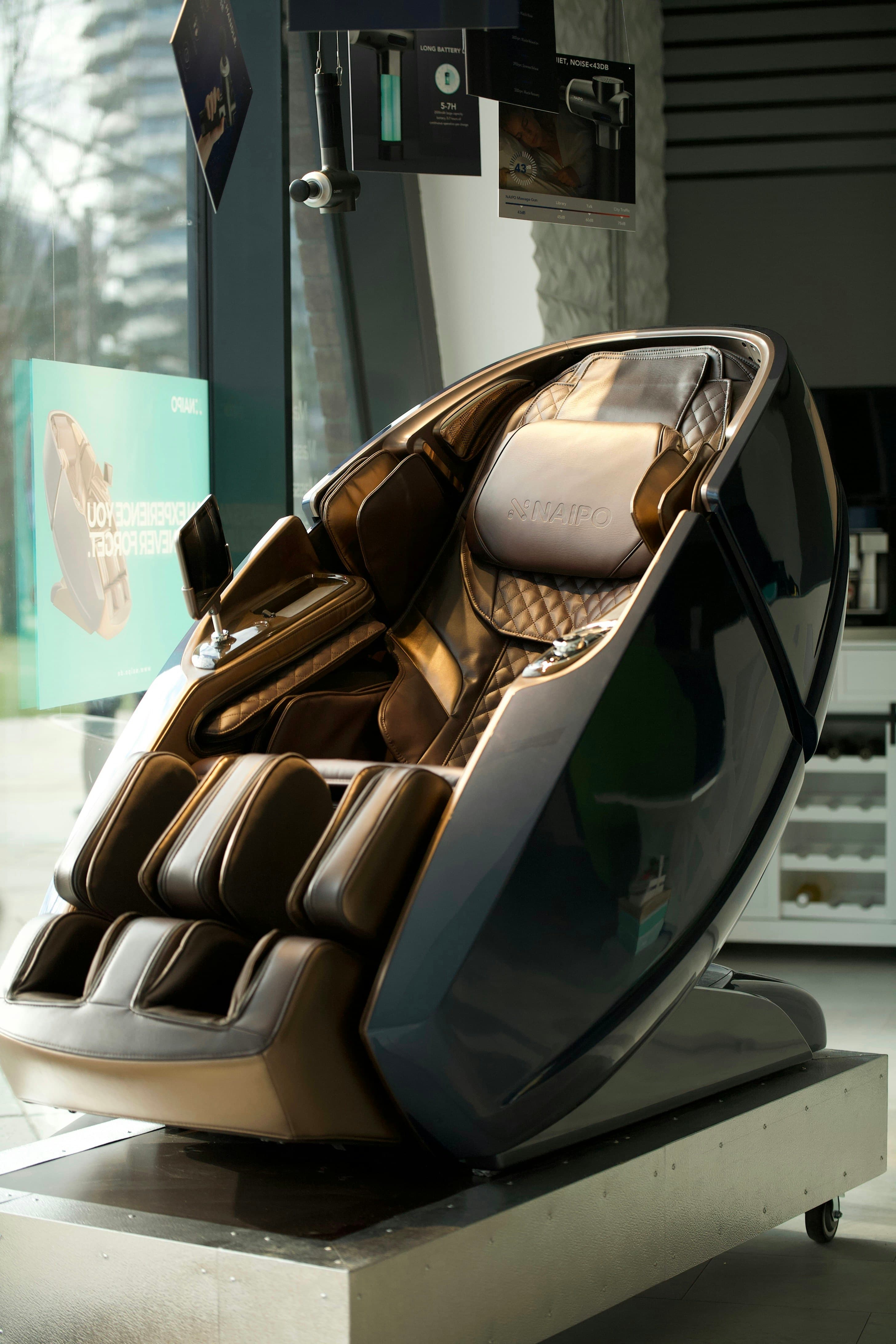
What a massage chair genuinely delivers: on-demand relief of everyday muscle tension, a documented short-term boost in relaxation and circulation, and a real convenience benefit over booking appointments. The quality of that experience scales with the mechanism: a fixed head is crude, a 3D SL-track (Real Relax, Synca) is a real massage, and 4D rollers (the Osaki chairs) add lifelike depth and rhythm. Heat, zero gravity, and body scanning meaningfully improve the session. What a chair does not do is treat injury, replace a skilled therapist's judgment, or personalize to a new complaint, so frame it as wellness maintenance, not medical care.
Longevity
Longevity and support vary more than price suggests, and warranty is the tell. Premium Osaki and Titan chairs carry competitive multi-year structural warranties (commonly 5-year structural, 3-year in-home), but, importantly, their shared parent has a documented pattern of slow, parts-first service, so coverage on paper does not guarantee a smooth repair. The compact Synca has a shorter 1-to-2-year warranty. Budget Real Relax offers a decent 3-year term but with inconsistent support and painful return logistics on a ~100 lb chair. Across the board, plan for the chair to be a multi-year purchase whose real risk is the service experience, not the initial hardware.
Alternatives to consider
- Osaki OS-Highpointe 4D
Our Editor’s Choice, the clearest “worth it” case: genuine 4D, SL-track, and best-in-class heat at a real ~$4,999.
7.9 - Titan Jupiter LE Premium
The value pick for larger and taller users: strong compression and fit at a discount price.
7.7 - Real Relax Favor-06
The lowest-risk way to try the category: a genuine SL-track chair for well under $2,000.
6.7
The verdict
Massage chairs are worth it for people who will genuinely use one several times a week for muscle relief and relaxation: for them, an at-home chair pays back the cost of repeated professional sessions and the convenience is real. Our Editor’s Choice, the Osaki OS-Highpointe 4D, is where that value is clearest. They are not worth it as an impulse luxury you will rarely sit in, and they never replace hands-on care for injury or chronic pain. Buy for a real routine, ignore the fake MSRP markdowns, and match the tier to your use: the ~$1,600 Real Relax to test the waters, the ~$5,000 Highpointe if you want the genuine premium experience.