Pros
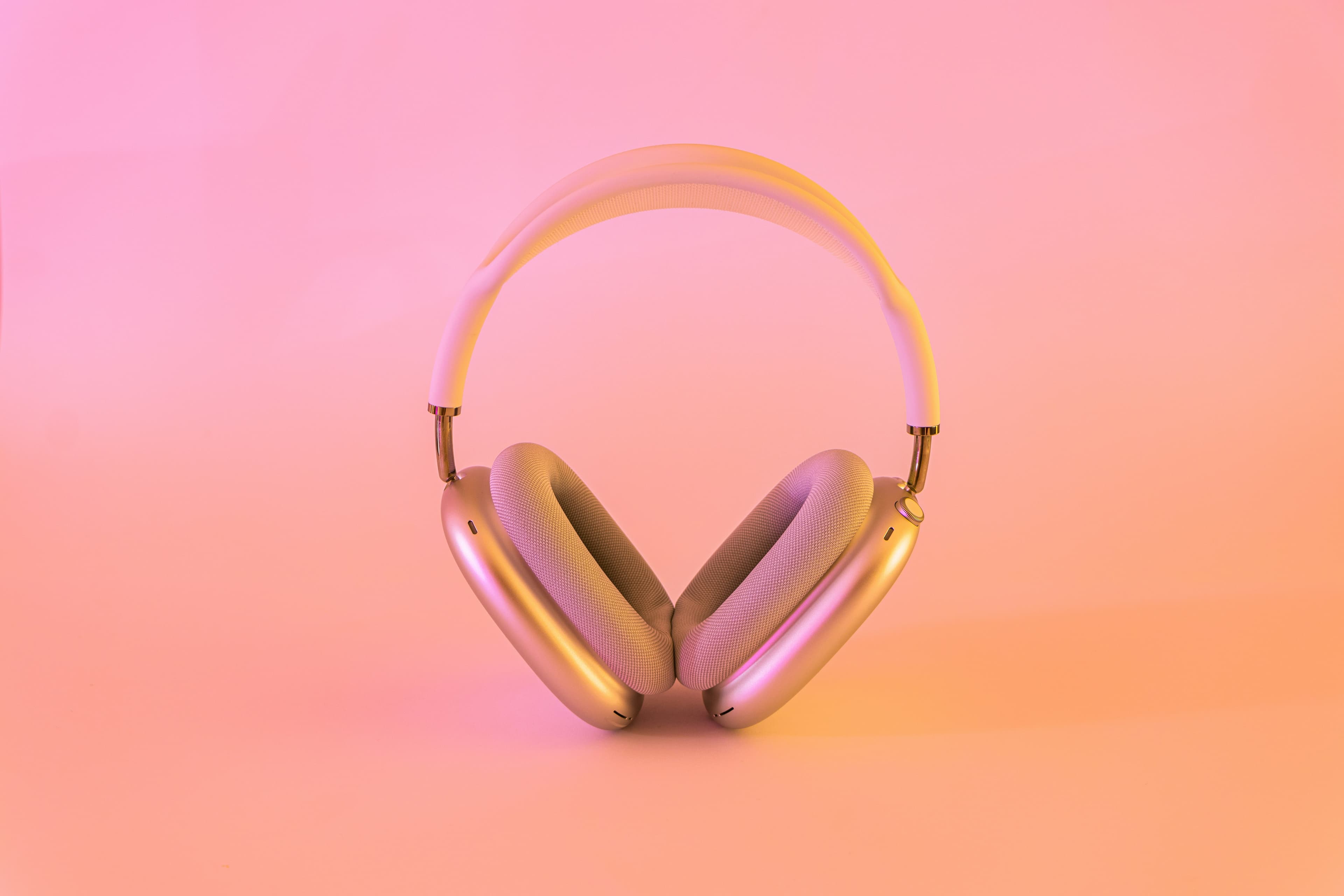
- Best build here: aluminium ear cups and a stainless-steel headband feel genuinely luxury-grade
- Excellent noise cancellation, sharpened by the 2026 H2 chip
- Unmatched Apple ecosystem integration: seamless switching, Spatial Audio, Live Translation, Conversation Awareness
- Lossless 24-bit/48 kHz audio available wired over USB-C
Cons
- Heavy at 386g: the most fatiguing fit here over long sessions
- AAC-only over Bluetooth, no hi-res wireless; lossless works only wired
- No power button and a widely criticized Smart Case that offers little protection
- Features and switching depend on Apple devices; no water resistance; weakest value at $549
Specifications
- Chip
- Apple H2 (2026 refresh; one per ear cup)
- Noise cancelling
- Up to ~1.5× more effective than the original H1 model
- Spatial Audio
- Personalized with head tracking; Adaptive Audio; Live Translation
- Battery
- Up to 20 hrs; 5 min → ~1.5 hrs
- Port / wired
- USB-C; lossless 24-bit/48 kHz only over wired USB-C
- Codecs
- AAC over Bluetooth only, no aptX, no LDAC
- Weight
- 386 g, heaviest here; aluminium & stainless steel
- Switching
- Seamless auto-switch across Apple devices (no true multipoint)
- Warranty
- 1-year + optional AppleCare+; no IP rating; Smart Case (no power-off)
Performance
Start with the ceiling: over Bluetooth the AirPods Max 2 is limited to AAC, no LDAC, no aptX, so true lossless happens only wired over USB-C, an odd cap on a $549 listening device. Below that ceiling the experience is polished. The H2 chip gives noise cancellation a genuine lift, particularly on traffic and voices, and the computational features (Personalized Spatial Audio, Adaptive Audio, Conversation Awareness, Live Translation) have no equal if your whole life runs on Apple hardware. But the generational jump didn't move the core listening experience much; SoundGuys was blunt that "The AirPods Max 2 doesn't sound meaningfully better than the original Apple AirPods Max." Very good sound, unmatched integration, and a hard limit on how far either can go wirelessly.
Build Quality
Pick them up and the price briefly makes sense. Machined aluminium ear cups on a stainless-steel frame make every plastic rival feel ordinary, and this is our top materials score of the five. Then the practical caveats stack up: no IP rating (the original generation drew condensation complaints in humid climates), a Smart Case widely panned for protecting almost nothing, no power button, and a sealed body with no user-serviceable battery. For a five-year purchase, the gap between how durable it feels and how serviceable it actually is drives our poor serviceability score despite the premium shell.
Value Assessment
Is the AirPods Max 2 worth it on features per dollar? No, and it isn't close. $549 is the second-highest price here for the heaviest headphone in the group, a core design fundamentally unchanged since 2020, and no hi-res wireless. What the money actually buys (the switching, Spatial Audio, the metal) only pays out inside an all-Apple setup and is largely wasted next to an Android phone. For an iPhone-and-Mac household that will wear them daily, the integration can carry the price. Judged as a standalone headphone, this is the weakest value of the five.
What Owners Say
“The APM2 can sometimes sound 'thin' and a bit too sterile when it comes to warmth and musicality.”
Verbatim owner and reviewer comments gathered during our research, linked to where we found them. They are not our words, which is the point.
Who Should Buy It
One buyer, clearly defined: the all-Apple household. If your devices are an iPhone, an iPad, and a Mac, you value a metal build over a light one, and you'll actually use Spatial Audio and Live Translation, the Max 2 is the only headphone that fully rewards you.
Who Should Skip It
Android users first and foremost, since most of what you're paying for stops working. Also anyone chasing hi-res wireless audio, long battery life, a light fit for long sessions, or basic travel practicality like a power button and a case that protects things.
Final Recommendation
We mean the Best for Apple Users label narrowly. The right way to think about the AirPods Max 2 is as an Apple accessory that happens to be an excellent headphone, not the other way around. Inside that frame it delights; outside it, the Sennheiser, Sony, and Bose all hand you more headphone for less money, and no future firmware update will change the weight, the codec list, or the price.