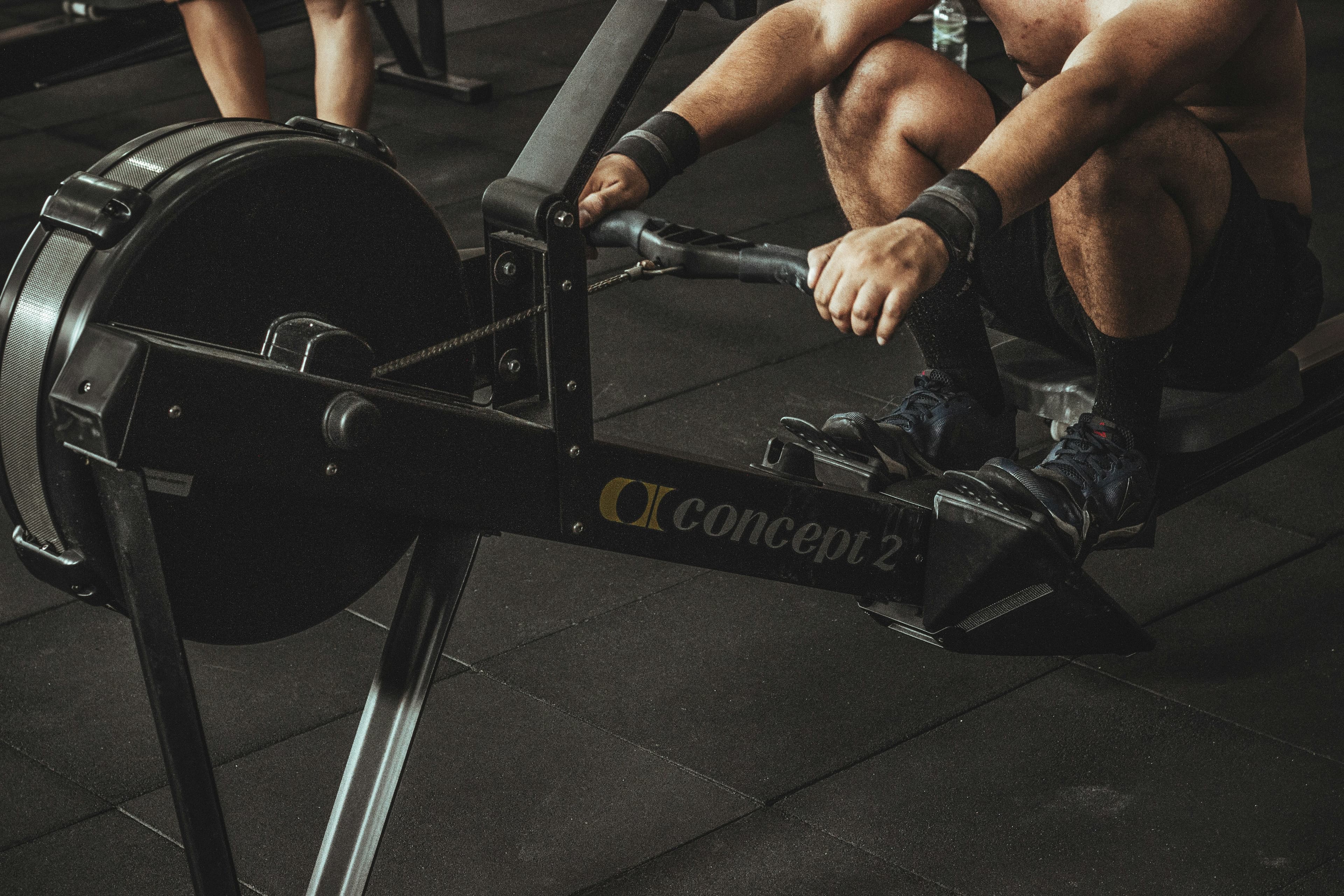
Pros
- Legendary durability: machines from the 1980s still run; rated for commercial-gym use
- No subscription, ever: the ErgData app and online logbook are free, and it works with Strava, Garmin, and 40+ apps
- The competition-standard PM5 delivers the most accurate, comparable data in the category
- Exceptional resale value (used units hold ~$800 to $1,000) and cheap, user-installable parts
- Separates into two pieces with no tools for easy storage; 500 lb capacity fits nearly anyone
Cons
- Small, utilitarian PM5 monitor: no big touchscreen, no built-in instructor-led classes
- Air resistance makes a noticeable whoosh, louder than the magnetic and water rivals (an apartment consideration)
- Industrial look won’t suit buyers who want a piece of furniture
- You supply your own motivation; there’s no on-screen coaching to keep you going
Specifications
- Resistance
- Air (flywheel), 10-setting damper
- Monitor
- PM5: accurate metrics; Bluetooth + ANT+; free ErgData app (no subscription)
- Subscription
- None required, ever
- Max user weight
- 500 lb
- Storage
- Separates into two pieces, no tools; caster wheels
- Fits users to
- ~6'6" (rail extension available)
- Machine weight
- 57 lb (standard legs)
- Warranty
- 5-yr frame / 2-yr parts (PM5 included); fully transferable
Performance
Strip away the screens and a rower has one job: a smooth, honest, repeatable stroke. The RowErg is the benchmark every other machine gets measured against on exactly that. Air resistance and a responsive flywheel give the stroke its feel, and the PM5 produces data so accurate and so universally comparable that competitions and elite programs standardize on it. A misconception worth clearing up: the damper adjusts airflow, not absolute resistance; how hard you pull sets that. Connectivity is unusually open too, with the free ErgData app plus dozens of third-party platforms for tracking and even live racing. What the RowErg refuses to do is entertain you. No touchscreen, no scenic rivers, no instructor counting you down. Self-motivated rowers tend to read that as a feature; if you know you need coaching to show up, that is the one real reason to shop elsewhere.
Build Quality
Forty dollars. That is roughly what a replacement chain costs, it lasts thousands of hours, and you can install it yourself. That is the whole ownership story in miniature: this is commercial gym equipment with a simple air mechanism, very few failure points, and cheap, widely stocked, user-installable parts, which is exactly how 40-year-old units are still in service. You maintain a RowErg; you do not replace it. The 5-year frame and 2-year parts warranty is solid, and it is fully transferable, a quiet acknowledgement from Concept2 that these machines outlast their first owners. Top marks for reliability and serviceability, without qualification.
Value Assessment
Kat T, a verified Rogue Fitness reviewer, put the value case in one line: 'This is the best rower out there. It is pricey, but totally worth it.' Our research backs the math. At $990 with no subscription, ever, the RowErg is the category answer for anyone searching for a rowing machine without a subscription, and its true cost of ownership embarrasses the connected field, where memberships now run $39 to $50 a month, roughly $470 to $600 a year on top of higher sticker prices. Run it out five years and a Hydrow Wave lands near $4,700 all-in while a Peloton Row clears $6,000; the Concept2 is still $990. Then add the best resale value in home fitness (used units hold $800 to $1,000) and a multi-decade lifespan, and the cost per year of ownership drops toward trivial. You give up a touchscreen and classes. You gain a machine that is cheaper up front, free to run, and effectively permanent.
What Owners Say
“Very smooth rowing. I really like the tall seat.”
“Over the last few years I have rowed once a year 50,000m...This rower is the best.”
Verbatim owner and reviewer comments gathered during our research, linked to where we found them. They are not our words, which is the point.
Who Should Buy It
Anyone who expects to still own the same rower in 2040. That covers performance and data-focused rowers who want competition-standard numbers, value buyers who count resale and a subscription-free lifetime as part of the price, and any self-motivated person who does not need a screen to get on the machine.
Who Should Skip It
Two groups, honestly. People who know from experience that they only show up for instructor-led classes belong on a Hydrow or Peloton Row instead. And apartment dwellers who are especially sensitive to noise should note the air flywheel's whoosh; a magnetic or water rower is the quieter neighbor.
Final Recommendation
Here is a closing thought instead of a recap: the RowErg is the only machine in this guide you could sell in five years for most of what you paid, which makes trying one close to risk-free. It is also the erg you already know from every gym, so the skills and the numbers transfer. Unless on-screen classes are the one thing standing between you and a workout, buy the Concept2 and be done with the decision for a few decades.