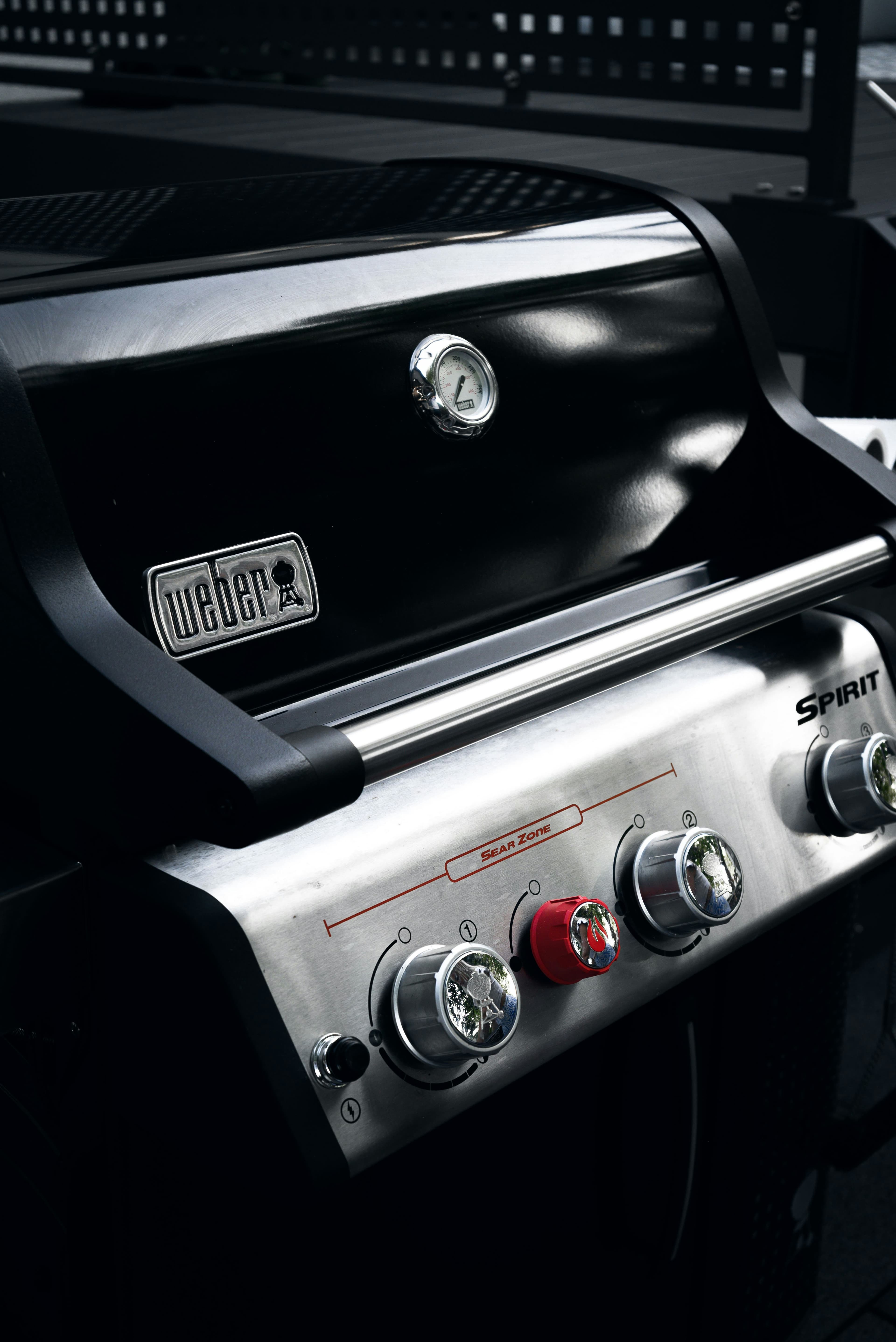
Pros
- Class-leading even heat: PureBlu tapered burners minimize hot spots across the whole grate
- Dedicated sear-zone burner reaches 750°F+ for restaurant-quality crust
- Outstanding 12-year cookbox warranty and a parts ecosystem that keeps grills running 15 to 20 years
- Weber Crafted grates accept griddle, pizza-stone, and wok inserts for real versatility
Cons
- Premium price: about $450 more than the entry Weber Spirit for broadly similar 3-burner output
- Base E-325 has no side burner (the E-335 adds one for ~$200 more)
- Gas-only: no wood-smoke or charcoal flavor; can’t replicate pellet or kamado results
- Heavy at 162 lb and a 2 to 3 hour assembly; smart features require the pricier EX/SX variants
Specifications
- Fuel
- Liquid propane (natural-gas variant available)
- Burners
- 3 PureBlu stainless burners, 39,000 BTU
- Sear zone
- Dedicated 13,000-BTU burner: 750°F+
- Cooking area
- 513 sq in primary (641 total with warming rack)
- Grates
- Weber Crafted porcelain-enameled cast iron (accepts griddle/pizza inserts)
- Flavorizer bars
- Porcelain-enameled steel: vaporize drippings for flavor
- Weight
- 162 lb
- Warranty
- 12-yr cookbox/lid; 10-yr burners/grates/flavorizer; 5-yr parts
Performance
As a gas grill, the Genesis E-325 does its job about as well as anything in its class. Its three PureBlu burners heat evenly enough that food cooks the same across the whole 513-square-inch grate (the single biggest weakness of cheap gas grills, solved here), and the dedicated sear-zone burner climbs past 750°F for a proper steak crust that most gas grills can’t reach. The Weber Crafted grates take griddle and pizza inserts for added range. The inherent ceiling is fuel: gas is fast, clean, and convenient, but it won’t give you the wood-smoke flavor of a pellet grill or the live-fire character of a kamado.
Build Quality
Build quality is classic Weber: a cast-aluminum firebox, porcelain-enameled steel lid and frame, and stainless burners that add up to a grill with a decades-long reputation for outlasting rivals. It earns top marks for reliability and serviceability less for exotic materials than for longevity and supportability: owners routinely report 15 to 20 years of service, and Weber sells official replacement burners, grates, and flavorizer bars for current and legacy Genesis grills for years, so a worn part is a quick fix rather than a new grill. The 12-year cookbox warranty reflects that confidence.
Value Assessment
At $949 the Genesis is a genuine premium over Weber’s own Spirit line and entry gas grills, and on day one you could get similar burner output for less. What justifies it is the long game: a grill that cooks evenly, sears properly, lasts 15 to 20 years, and stays fully serviceable with cheap, available parts has a low true cost per year and is the textbook “buy it once” appliance. You’re paying for longevity and supportability, not flash, and for a gas grill you’ll keep for two decades, that’s money well spent.
Who Should Buy It
Gas-grill buyers who want maximum reliability, even heat, and a grill that lasts and stays serviceable for decades: families and frequent entertainers who value convenience and a “buy it once” appliance over wood-smoke flavor.
Who Should Skip It
Anyone who wants wood-smoke or charcoal flavor (a pellet grill like the Recteq, or a kamado), shoppers on a tighter budget (the Weber Spirit delivers most of it for less), and buyers who need a built-in side burner out of the box.
Final Recommendation
The Weber Genesis E-325 is our Best Gas Grill: the benchmark for even heat, searing, and longevity, backed by the best warranty and parts support in grilling. It’s a premium over entry grills and it can’t make smoke, so if convenience and a buy-it-for-decades gas grill are what you want, it’s the easy pick; if you want wood flavor, look to our pellet or kamado choices.